Lion Brand Notebook

News, Ideas and Information for Crafting with Yarn

Image frame

Archive for the 'Tutorials' Category


Dress Up a Hair Tie: Make a DIY No-Sew Scrunchy

June 18th, 2012

Pin It

Create your own designer hair ties with this quick and easy method for turning any hair elastic (or plain old rubber band if you’re daring) into a fabulous scrunchy! Scrunchies make great party favors, gifts for girls’ sports teams or fun accessories for any occasion. Cute scrunchies are useful and always add a note of celebration – even for grown ups! Adding a scrunchy to a bridal shower goodie bag, making them for bride’s maids or crocheting enough for a spa day or girl’s night are all clever ways to give handmade scrunchies as gifts.

Materials:

  • Hair elastic/rubber band. Any elastic that works well in your hair will work well for this project.
  • Crochet hook. Try using a hook slightly larger than you usually would with the yarn of your choice. You want volume in this project with  looser stitches.
  • Yarn of choice. I’ll be demonstrating how to create these stitches with a strand of Vanna’s Choice so you can easily see the stitches. But scrunchies like these are extra special in novelty yarns like Vanna’s Glamour, Fun Fur or Martha Stewart Crafts Glitter Eyelash.

(more…)


How to Crochet Over Your Ends

May 23rd, 2012

Pin It

Tired of weaving in ends whenever you reach a new skein in your crochet project? Avoiding crochet colorwork project because there are too many ends? Try crocheting over your ends! This easy technique allows you to keep on crocheting so that the end you have to weave in is the very last one. Here’s how to do it.

Crocheting Over Your Ends

You’ll have two pieces of yarn: the working yarn and the tail you’re weaving in (top image). Place the tail over the top of your next stitch (second image). Then, complete your stitch as normal (third image). This securely hides your tail in the middle of the stitch (bottom image). Continue in this manner until the entire tail has been used, then snip any excess yarn that may be sticking out. That’s all there is to it! This technique is helpful for both stripes and solids, so get crocheting!

Related links:


Gauge Swatch 101: How to Make and Measure Your Swatch

May 14th, 2012

Pin It

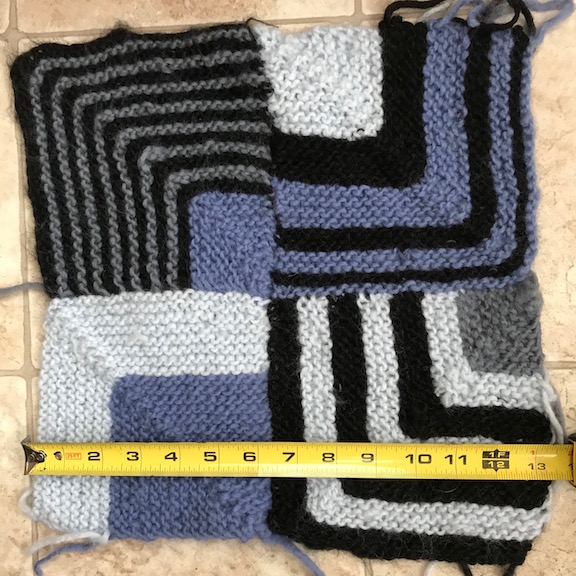
I admit it: I used to cheat at gauge swatches. I would cast on, work a few rows, then assume I was good to go. Of course, my projects never came out the right size (and I have the ill-fitting sweaters to prove it)! Since then, I’ve decided that I prefer sweaters that fit, so now I’m a believer in the gauge swatch. Not only does a swatch help you measure your gauge, but it also gives you the chance to practice your stitches and see how your project will drape. Are you ready to swatch now? Here’s how to make and measure your swatch in 5 easy steps.
How to Gauge Swatch
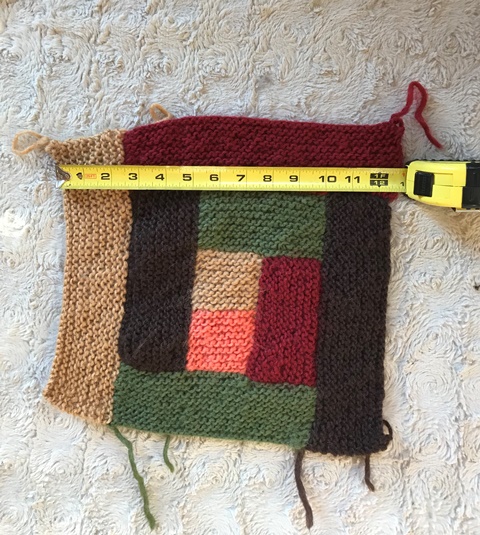
Step 1: Cast on using the same technique you’ll use for your project. The gauge section of your pattern will tell you how many stitches per inch to anticipate, usually given over 4 inches. To get the most accurate measurements, you’ll want to cast on enough stitches to give you a 5-6 inch swatch. For example, this pattern has a gauge of 16 stitches = 4 inches, so I’m casting on 24 stitches. Work in your pattern for 5-6 inches, then loosely bind off.
Step 2: Measure vertically and horizontally. Don’t cheat by stretching it! It’s okay if your swatch doesn’t lay flat; hold it flat without stretching as you measure. For more accurate measurement, start your counting a few stitches in from the edge (as the size of your edge stitches may be distorted). Note your stitch and row gauge because it’s all about to change!
Step 3: Wash (and dry) your swatch in the same way that you’ll care for your finished piece.
Step 4: Are you going to block your finished piece? If so, block your swatch. Otherwise, skip ahead to Step 5. Click here for more information on blocking.
Step 5: Measure your swatch again. I repeat, don’t cheat by stretching your swatch! This will be your final gauge, which you’ll match against the pattern.

And that’s all it takes to make a gauge swatch! After following these steps, did your gauge change? Mine sure did! I went from 20 stitches over 4 inches (before washing and blocking) to 16 stitches over 4 inches. Likewise, my row gauge went from 38 rows over 4 inches to 32 rows over 4 inches. Does your gauge match your pattern? If not, it’s time to make another swatch. If your swatch is too small (too many stitches per inch), go up a hook/needle size; if your swatch is too big, go down a hook/needle size.

Related links:


How to Crochet Broomstick Lace

April 26th, 2012

Pin It

Broomstick lace has a beautiful, open look that really shows off the character and texture of your yarn. Dating back to the 1800s, this technique creates large loops of yarn that gently twist to the left, giving the finished project especially elegant drape. For a long time I was intimidated by broomstick lace, so I wanted to share how easy it is to create this beautiful, reversible fabric!

Ready to get started? You’ll need:

  • Yarn for your project: Choose a yarn you want to show off. I chose Martha Stewart Crafts Extra Soft Wool Blend because I love the twist and soft luster.
  • Crochet hook: Use whatever hook you feel works best with your yarn. I used a US K10.5/6.5mm hook for larger, more open stitches.
  • Large knitting needle (or actual broomstick, if you dare!): You can use any large needle for this project; the larger your needle, the larger your loops will be. I used a needle from a pair of ‘Speed Stix’ (US 50/25mm). When making broomstick lace, this tool is often called the “pin.”

How to Crochet Broom Stick Lace Step By Sep Guide with Pictures


1. First, make a chain. For this sample I wanted to make repeats of 5, so I chained 15 stitches for 3 repeats. Draw the final chain up over the knitting needle.

2. Crochet back into the chain, drawing up a loop in each stitch and pulling it up over the knitting needle.

3. Repeat until you have drawn up a loop through every stitch in your chain and transferred them onto the knitting needle. This step creates the large loops of yarn you will see in the finished lace.

4. Slide your hook through the first group of loops (for this example that’s 5 loops per repeat) and pull them off the needle. At this point, if it is easier for you to manage, you can remove the large needle from your work altogether.

5. Yarn over and pull through the group of large loops on your hook. Work one single crochet for every loop in the group on your hook (I worked 5 single crochet into the group of 5 loops). Continue this process until all the loops have been crocheted into. Note: make sure to check how many loops you have in each group to avoid accidental increases or decreases.

6. This completes your first row of broomstick lace! You can now draw loops up through each of the single crochet stitches you made in step 5, and continue to repeat steps 1-5 till your project reaches the desired length.


What new techniques have you tried that looked tricky at first? What would you tell a crafter who was nervous about trying a new craft for the first time? Leave a comment to share!


Related Links:


How to Make Your Own Easy, No-Mess Easter Basket Grass

April 5th, 2012

Pin It

Easter Basket Grass How To TutorialMaking Easter basket grass yourself is a great idea; it’s a simple, fun activity you can do with kids, and helps get everyone into the holiday spirit with egg-hunt anticipation.

Making your own out of yarn secured inside the basket also means you’ll have a lush, great-looking basket and no more plastic grass all over your house or yard. This easy tutorial will show you how to create a festive Easter basket in any color.

What you’ll need:

(more…)


How to Make Amigurumi Cuter with Perfect Eye Placement

February 10th, 2012

Pin It
amigurumi
Adding eyes is a key step in finishing your new amigurumi, but where do you place them on your project’s face?Amigurumi tend to look best when their eyes are place near the middle of the face – if you measure the height of your projects head, try placing the eyes about 1/3 of that distance from the top of the head.For these examples, I used a set of safety eyes and crocheted the head portion of the Best Bunny pattern from LionBrand.com with the Papaya shade of Baby Wool.  You can also use felt, buttons, or embroidery to give your amigurumi eyes.
Narrow Eyes Putting the eyes very close together can give your new friend a determined or even pouty expression. If you’re making a silly toy that you want to have beady eyes, this arrangement would be just right.
Wide Eyes Eyes that are very wide-set can give your project an almost lizard-like appearance, so if you’re making a cute reptile like Sssandy or Salvadore Snake, that would be the prefect way to arrange the eyes.
Eyes Forward Most amigurumi look extra cute and friendly when the eyes are wide set, but the distance between them is less than 1/3 the circumference of the head. You want them to be wide enough that they look very friendly, but close enough together so that you could imagine that they are looking at you.

For this example, I used a set of safety eyes and crocheted the head portion of the Best Bunny pattern from LionBrand.com with the Papaya shade of Baby Wool.  You can also use felt, buttons, or embroidery to give your amigurumi eyes.

For more tips on making fun amigurumi friends, check out these posts:

For over 300 patterns for amigurumi and other handmade toys, click here (you may be asked to sign into LionBrand.com).

Have you been making, or longing to make amigurumi? Share your tips or questions in the comments below!


How to Make Easy Finger-Knit Holiday Garlands

December 7th, 2011

Pin It

This year spread holiday cheer by making quick and easy finger-knit garlands with friends, family and kids. A finger-knit garland is a wonderful reusable decoration, and an easy way to get kids and family members involved in holiday crafting. Finger-knitting is a simple, quiet project kids can work on with family or on their own while you prepare for the holidays, and the finished garlands can adorn almost any part of the home, instantly adding handmade charm and warmth to your decor.

With so many colors available, I picked just a few of my favorites to make these samples. Holding two yarns together as I did in two of these samples gives your garland a rich, blended look.
Sample GarlandsI made these garland swatches with samples of (from left to right): Martha Stewart Crafts Glitter Eyelash [Yellow Gold and Blue Topaz held together], Amazing [Roses], Martha Stewart Crafts Glitter Eyelash [Garnet], Holiday Homespun [Wreath], and Holiday Homespun [Berry and Starlight held together]

Ready to get started? Follow these 5 steps and you’ll be making and hanging your own garlands in no time.

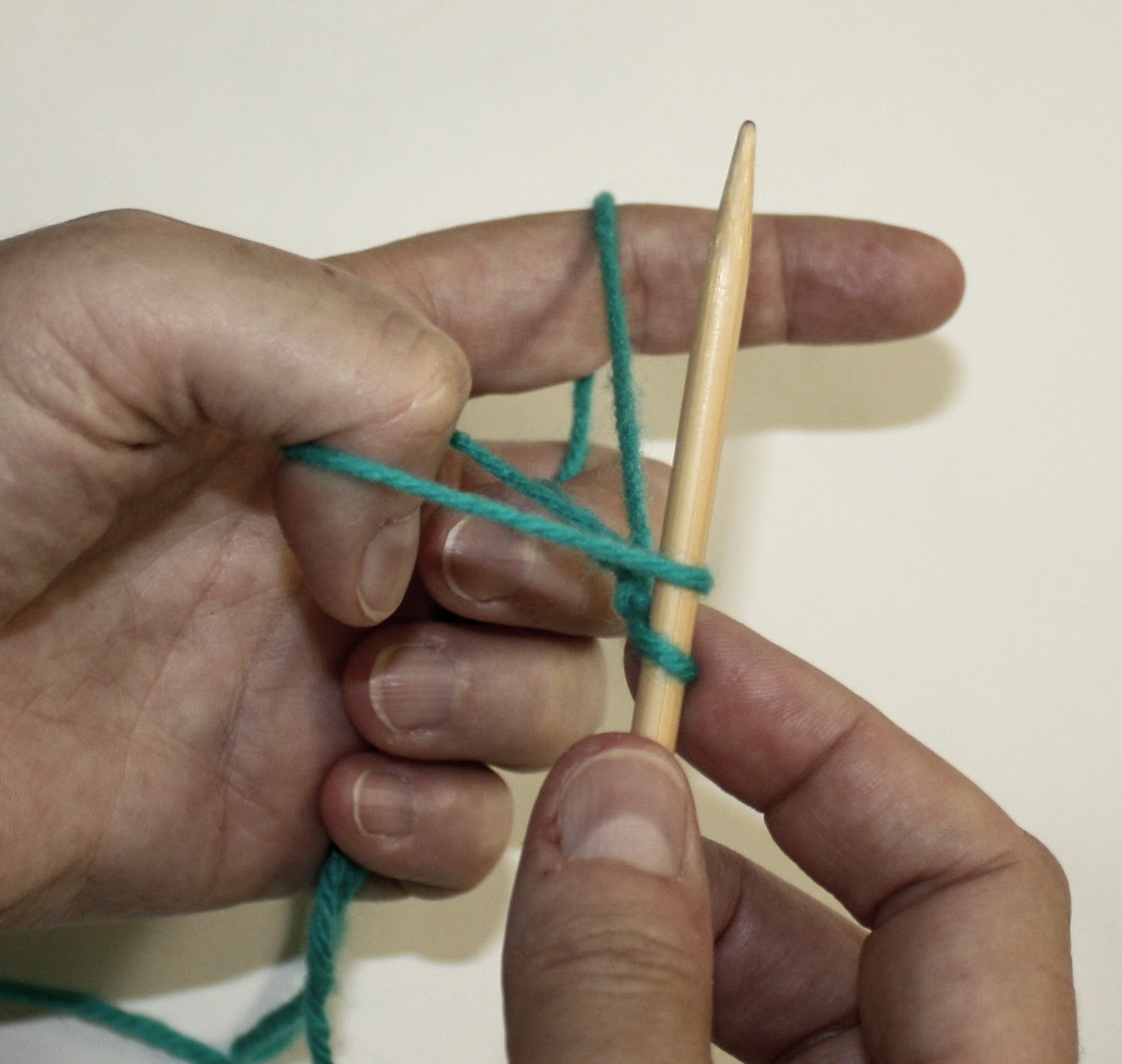
Step 1: Pick a yarn you are comfortable with and cast on (I picked Vanna’s Choice for these pictures because it’s a clean straight yarn and is perfect for practicing new skills). Just like in needle knitting, there are many ways to cast on. The best way I have found is to hold the tail of your yarn between the thumb and palm of your non-dominant hand (not the hand you write with). In a simple over-under pattern, weave yarn between your fingers: under your index finger, over your middle finger, under your ring finger, over your pinky. Then wrap around the back of your hand under your pinky, and over your ring finger, under your middle finger and over your index finger. Refer to the pictures below for guidance.
Step 2: Wrap each finger once more with yarn, following the same over-under pattern from the first step. You will have 2 loops of yarn on each finger once you’ve completed step 2.
Step 3 (the actual knit stitch): Pull the bottom loop on each finger up over your fingertip and release. I like to start from my pinky and work across toward my index finger. Once you’ve done this 4 times, you’ll have completed your first row of knits and will have one loop remaining on each finger.
Step 4: Repeat! Keep repeating these steps and watch as your project grows into a long, loosely knit rope. Don’t worry if your first few rows seem a little uneven. As you work and your garland gets longer, you’ll see that your project will even out.
Step 5: Decorate your home. For a festive twist, use a yarn garland to decorate a holiday wreath or Christmas tree, or drape it from bannisters, railings, doorways, chandeliers and mantlepieces. You can even hang small ornaments from them, like tiny glass balls or handmade snowflakes.

Have you ever finger-knitted, or made holiday garlands from yarn? Tell us in a comment on this post.


How to Use the Customer Gallery in 3 Easy Steps

September 1st, 2011

Pin It

Have you discovered the Customer Gallery at LionBrand.com? It’s an excellent place to share pictures of your work and get inspired by the projects others have loaded, all featuring Lion Brand yarns. The gallery is easy to access and very simple to use. To help you get started, I’ll show  you how I added my latest amigurumi, a Best Bunny I made in Lion Cotton, to the gallery in 3 easy steps.

Step 1: Access the Customer Gallery
To go the Customer Gallery, you can click here or click the Have you made this pattern? Send us a photo link at the very bottom of any Lion Brand online pattern. From the LionBrand.com homepage, you can navigate to the gallery by selecting the Community tab and then clicking the Customer Gallery option (it’s the second option in the list).

Step 2: Browse Through the Gallery & Add Your Project
Once you are in the gallery, feel free to look around! You can see over 3,300 projects there right now, and more are being added all the time. If you want to upload a project like I did, click the Click here to post it! link in the page description.

Step 3: Upload a Picture & Share Your Story
The next step is adding your work to the gallery. Here you can upload up to four pictures of your project, just be sure they are all in JPEG format. You can select a title (I chose “Margaret’s Best Bunny”) and fill in all the details about which yarn you used, how you liked the pattern and why you made it. Once you’re finished, click the orangesubmit button at the bottom of the page, and you’re done!

If you take a better picture later, or remember a helpful hint you’d like to share, you can go back and edit your gallery submission through your account at LionBrand.com. All projects uploaded to the gallery are reviewed before going online, so you should see your project in the gallery in 5 to 7 days.

If you like the gallery, why not upload a project of your own?  Leave us a comment to share which one is yours.


How to Make a Ruffle Tank Top with Crochet

July 19th, 2011

Pin It

Many yarncrafters face the same challenge every summer: “I want to make something to wear right now even though it’s warm outside.” I have had this issue on my mind all summer long. On a recent shopping trip I finally found my summer yarncrafting inspiration. I’d like to share with you what I made, and what I learned in the process.

Recently, while admiring racks of ornate summer tank tops, I noticed little ruffles or motifs all over my favorite pieces. I realized then that little details are the perfect way to incorporate crafting into any summer wardrobe. I decided that my first project would be to add a sparkling ruffle in Vanna’s Glamour to an otherwise ordinary tank top.

First, I used a slender tapestry needle to Blanket Stitch a border all the way around the neck of the tank top. I used Blanket Stitch because it creates loops along the edge of the fabric without adding bulk.
Next, I worked Slip Stitch crochet into the border I had made, using the edge loops as my foundation row instead of a chain. This is a great method for adding crochet trim to different fabrics.
After I completed the border, I was ready to get started on the ruffle. Instead of writing a ruffle pattern from scratch, I followed the directions for the Potato Chip Scarf with a few alterations. I made a chain of 40 stitches (instead of 143), and used a single strand of Vanna’s Glamour with a size H8 hook. Crocheting the ruffle separately made the project a lot easier to manage, and helped me obtain the gauge I wanted.

After stitching the ruffle to the border and weaving in the ends, my tank top was ready to go! I really love the way it turned out, and figuring out how to do it was half the fun.

Have you made simple clothing special by adding hand made details? Leave a comment to tell us about your projects and inspiration!

Related links: